
Perfect Paver Co
Paver Aftercare & Maintenance
Let’s Keep Your Pavers Looking Great.
You made the right choice working with Perfect Paver Co, and your pavers show it. To make sure your new investment looks its best and lasts, here are a few important next steps to follow over the next 72 hours and beyond.

The First 72 Hours: What You Need to Know
Step 1: Allow Time for Curing
- Wait 4-6 hours before walking on your pavers to allow the sealer to dry.
- After 24 hours, you can place furniture back on the pavers.
- If a driveway was serviced, avoid driving on it for:
- 48 hours when temperatures are in the 80s.
- 72 hours when temperatures are below 80°F.
Step 2: Check for Tackiness
- If your driveway was serviced, feel the sealer for tackiness after the waiting period.
- Test Drive: If you’re testing a driveway, pull a car forward 4 feet and then reverse to check if it leaves marks. If it does, please call us and keep your cars off the surface.
- Mold and algae
- Black mildew stains
- Ground-in dirt and grime
- Organic buildup
- Surface contaminants
- Pool deck discoloration
- Driveway staining
The First 72 Hours: What You Need to Know
Step 1: Allow Time for Curing
- Wait 4-6 hours before walking on your pavers to allow the sealer to dry.
- After 24 hours, you can place furniture back on the pavers.
- If a driveway was serviced, avoid driving on it for:
- 48 hours when temperatures are in the 80s.
- 72 hours when temperatures are below 80°F.
Step 2: Check for Tackiness
- If your driveway was serviced, feel the sealer for tackiness after the waiting period.
- Test Drive: If you’re testing a driveway, pull a car forward 4 feet and then reverse to check if it leaves marks. If it does, please call us and keep your cars off the surface.
- Mold and algae
- Black mildew stains
- Ground-in dirt and grime
- Organic buildup
- Surface contaminants
- Pool deck discoloration
- Driveway staining
Paver Maintenance to Keep Your Space Looking Its Best
Weekly Maintenance: Keep It Clean
Once a week, blow off the pavers using a leaf blower or sweep the patio using a broom. It’s best to do this right after the lawn is cut, but the purpose is not just to blow off the grass clippings. You want to blow off mulch, dirt, leaves, grass, and any other organic material that is on your pavers and sand joints.
Monthly Maintenance: Give Your Pavers a Refresh
At least once a month, wash down all of your pavers and sand joints using your garden hose.
DO NOT USE A PRESSURE WASHER, as you will likely damage the sand grout.
Monthly Maintenance: Pre-Treat with White Vinegar
Use cleaning-strength white vinegar as a pre-treat prior to rinsing your pavers off. The acid in white vinegar is one of the few effective ways to kill mold spores and other types of vegetation safely and effectively.
For larger areas, you can choose to focus on doing this pre-treat to areas known to have mold or vegetation issues. However, this needs to be done as a preventative maintenance and is not nearly as effective once the vegetation has germinated.
Follow the dilution instructions printed on the cleaning-strength white vinegar container (6 parts water: 1 part vinegar based on using a concentrate) and put the solution into a sprayer. Perform a test spot in a small, inconspicuous area. Let sit for 15 minutes, then rinse and allow to dry. Observe the paver surface in sample area to ensure no alteration to paver surface. If none observed, it is safe to proceed.
If you have any additional questions, you can access our video library or check out this video to learn more about caring for your pavers.
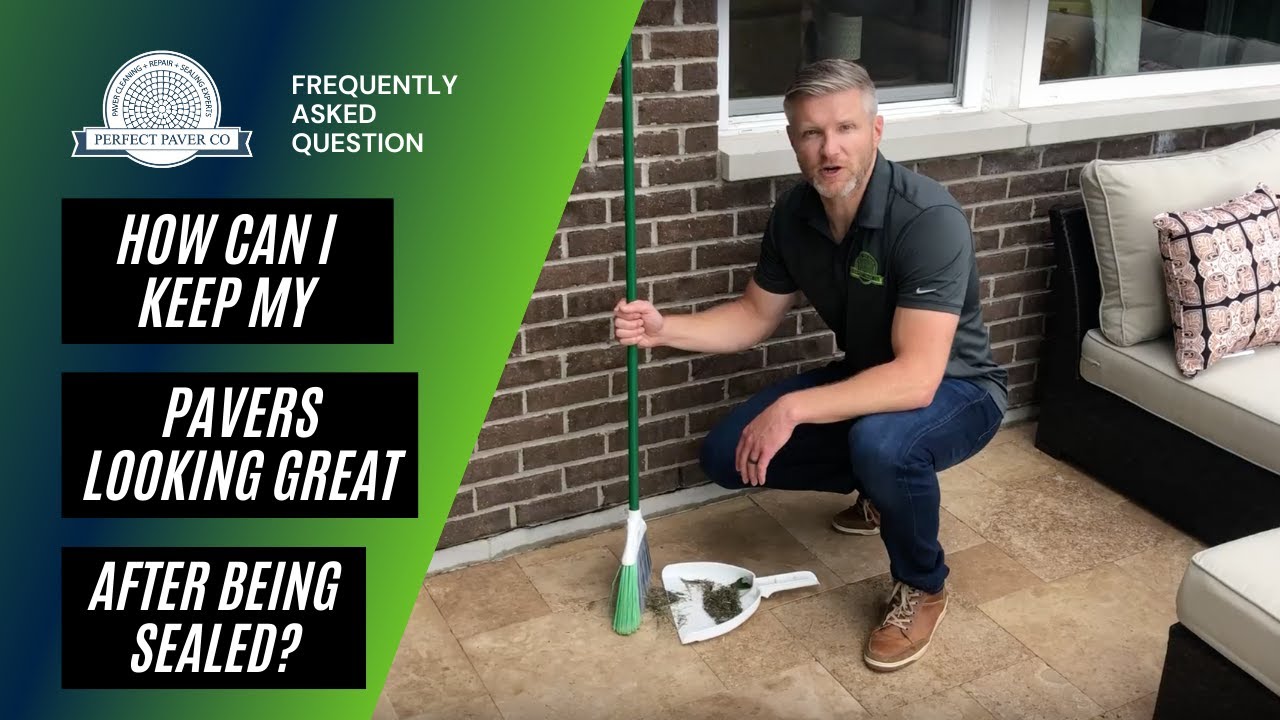
Want to learn even more about caring for your pavers?
Explore professional tips and recommendations in our Resources hub.
- Mold and algae
- Black mildew stains
- Ground-in dirt and grime
- Organic buildup
- Surface contaminants
- Pool deck discoloration
- Driveway staining
Feeling Overwhelmed by Paver Upkeep?
If you want to keep your pavers looking pristine but prefer to have a pro handle things, Perfect Paver Co has you covered with aftercare and maintenance services. Get a free estimate from our team, and let’s make sure your results last.
Frequently Asked Questions About Aftercare and Maintenance
How do I maintain my pavers after they’ve been cleaned and sealed?
Ongoing maintenance is simple, but important. The goal is to keep organic debris such as dirt, mulch, leaves, and grass off the surface and out of the joints. Regular blowing and occasional rinsing go a long way in keeping your pavers looking clean and performing properly.
How often should I clean or maintain my pavers?
We recommend:
- Weekly: Blow or sweep off debris
- Monthly: Rinse the surface and joints with a garden hose
This helps prevent buildup that can lead to weeds, staining, and premature wear.
Why is it important to keep debris off the pavers and joints?
Weeds and organic growth don’t start in the sand—they start from debris sitting on top. When dirt and organic material build up, it creates an environment where seedlings can take hold and grow. Keeping your pavers clean prevents that from happening in the first place.
Will weeds still grow after your process is complete?
Our process significantly reduces the likelihood of this happening. Combined with polymeric sand, our process helps prevent most weed growth—but no system can guarantee zero weeds. With proper maintenance, most homeowners see a dramatic reduction and much easier control moving forward.
What should I do if I see weeds growing?
Remove them. It’s not uncommon for small seedlings to appear early on, and the key is to pull them before they establish. Ongoing cleaning and rinsing will help prevent future growth.
Why do some areas of my pavers get more weeds than others?
Not all areas of your pavers behave the same. Areas with full sun and good drainage tend to stay dry, which means there’s less opportunity for weeds to take hold and grow.
Areas with poor drainage, shade, or consistent moisture create an environment where debris can stay damp, which makes it much easier for seedlings to germinate. These areas will naturally require more attention and maintenance to keep weeds under control.
Will I need to maintain some areas more than others?
Yes. Areas that receive less sunlight or hold moisture longer will typically need more frequent cleaning and upkeep. Keeping these areas blown off and rinsed regularly is key to preventing buildup and minimizing weed growth.
Can I pressure wash my pavers for maintenance?
Do not use a pressure washer for routine maintenance, as pressure washing can damage the joints and remove sand. A standard garden hose is the best way to rinse your pavers without affecting the system.
Why do you recommend using vinegar during maintenance?
Cleaning-strength white vinegar is an effective way to treat mold, mildew, and organic growth at the source. When used properly, it helps prevent buildup and keeps your pavers looking clean without damaging the surface.
What causes certain areas of my pavers to get dirtier or grow more mold?
Areas that stay damp longer due to shade, poor drainage, or water exposure tend to collect more dirt and organic buildup. These areas may require more frequent attention to maintain a clean, consistent appearance.
Why does polymeric sand sometimes break down in certain areas?
Polymeric sand performs best in areas that can dry out between wet cycles. If an area stays consistently damp or holds water, the sand can remain soft and break down over time. These areas may require more frequent maintenance or touch-ups.
If you need more sand or sealer, check out our special polymeric sand blend and other products on our website.
Do I need to follow all of these maintenance steps?
The more consistent you are with maintenance, the longer your results will last. Even simple steps like blowing off debris and rinsing regularly can significantly extend the life and appearance of your pavers.
Do you offer ongoing maintenance services?
Yes. In addition to providing aftercare instructions, we offer maintenance services where our team can handle cleaning, inspections, and upkeep for you.
How do I know if my pavers need maintenance or service again?
Common signs include:
- Increased buildup or staining
- More frequent weed growth
- Fading or uneven appearance
- Joint sand beginning to wear
If you’re noticing these, it may be time for a maintenance visit.
Thank You for Trusting Us!
We appreciate the opportunity to serve you. Your new pavers are an investment in your home, and we’re here to help you maintain them. If you have any questions, please don’t hesitate to reach out!
Thank you for choosing to work with us. We’re honored that you’ve given us the opportunity.
The Perfect Paver Co Team


Built on decades of hands-on experience, Perfect Paver Co doesn’t just clean—our team is obsessed with perfection. Let’s restore your outdoor spaces!